
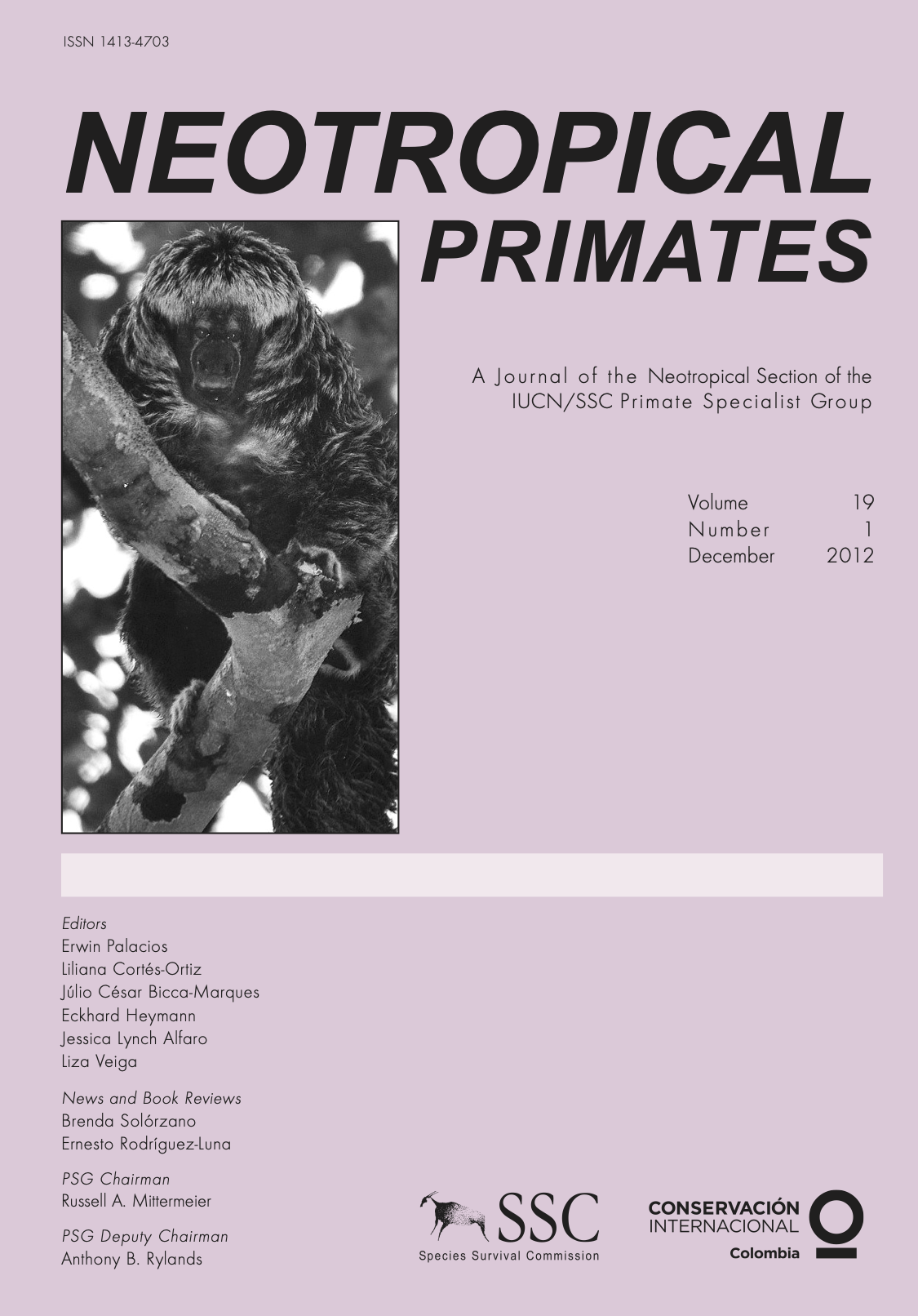
The ecology of trunk-to-trunk leaping in Saguinus fuscicollis: implications for understanding locomotor diversity in Callitrichines
DOI:
https://doi.org/10.1896/044.019.0101Palavras-chave:
Tamarins, marmosets, positional behavior, vertical clinging and leaping, habitat utilizationResumo
Several species of callitrichines (tamarins, marmosets, and callimicos) are reported to frequently leap between vertical supports when foraging and traveling in the forest understory. In the present study, we examine trunk-to-trunk leaping in a wild group of four habituated adult saddleback tamarins (Saguinus fuscicollis weddelli) in northern Bolivia. From June through July, 2011 we analyzed 200 leaps in which the tamarins moved between vertical supports. On average, takeoff height was 4.1 m (±1.3 m, range 1-7.5 m). During the airborne phase of travel the monkeys lost an average of 0.5 m (±0.5 m) at contact with the landing support, and the mean distance leapt was 1.4 m (± 0.7 m). We found no correlation between the diameter at breast height (DBH) of landing and takeoff supports, and either the distance leapt or height gained/lost during leaping. Across callitrichine taxa, it appears that ecological distinctions in diet, patterns of habitat utilization, and predator avoidance strategies have played an important role in understanding the frequency and context of trunk-to-trunk leaping behavior.
Downloads
Downloads
Publicado
Edição
Seção
Licença

Este trabalho está licenciado sob uma licença Creative Commons Attribution-NonCommercial-ShareAlike 4.0 International License.